
after midnights
life is emotionally abusive & ends when it ends

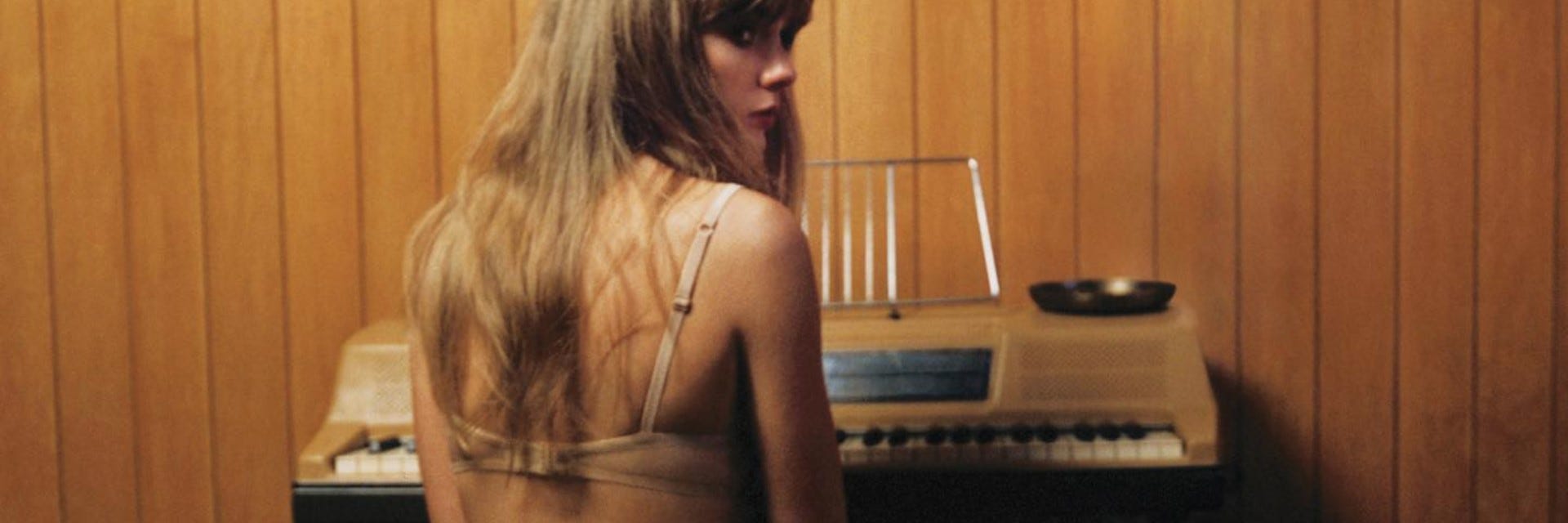
Midnights feels like some sort of relic now — three years really pulls you away from whatever was happening. The prolix self-indulgence of Tortured Poets Department and the pithy self-indulgence of Life of a Showgirl have obscured that one, which at the time of its rollout was hurting for a concept, a publicity hook. Yet it signaled two key shifts in its artist’s music. The feathery bedroom-pop Swift and Antonoff spun into opalite has become the first “signature sound” of a career where no album resembled the last*. And not only is it the one where she stopped pretending saying “fuck” was a big deal, it stuck a flag in lyrical territory she hasn’t left: allusive and insular, where she was once #1 at lighting up little truths, in a savvy balance of poetic and plainspoken. There was a benevolence to her best albums the impenetrable Eras Tour didn’t exactly evince. What has Swift been doing, really, but chillaxing on her laurels?
Swift isn’t Prince or Bruce Springsteen in ‘84 — her artistic and commercial journeys do feel mutually exclusive. This is a superstar who consolidated her domination with two indie-folk albums. The Martin/Shellback Life of a Showgirl is fizzy and peppy compared to Poets, but it doesn’t sound like megapop blockbusters of yore, and the lyrics getting the most attention are doing so because they’re too personal, ugly flashes of hand. The album is a lock to swallow the Top 10, like Midnights and Poets — but it’s never because of how these records sound, how hard they scratch a pleasure-principle itch. It’s because they’re by her. Panning in the dirt for her lingering melodic, verbal and emotional utility seems to be the task here. Swift is gifted as fuck, and she shows her eccentricities more the harder she tries to bolt from them. Just how these advantages, and Showgirl’s reception, will affect lucky album 13 isn’t easy to tease out.
Also note the proximity of Showgirl to the rerecording of Reputation, her thorniest album to date. Her unthreatened position atop the culture means this revenge-minded record isn’t half-defeated, like that one was; raw power has gone to her head a bit, numbed some things, though “out of touch” is a charge that’s come up for ages. Still, you wonder if time-traveling back to the Reputation space hit some nerves — and half of that album, remember, is an atypically vulnerable love letter to Joe Alwyn. Reputation is a signal for what might come, after the last focus group has dispersed from the Showgirl poll. Swift gets steely and icy-quiet if she feels affronted, and while she didn’t quite stick the landing with Reputation, she still managed to send a fair-enough don’t-fuck-with-me to the one object she cannot simply kiss off: the public. An early retirement, to kids and football husband and picket fence, could be over the rainbow.
In any case, this is just arbitrary thinkpiecing. The personal angle at play is that Midnights is my favorite TSLP, and a favorite album in general, for the usual reasons — how it sounds, and how it makes me feel. It came out at a time when I was brutally untangling from a first love I’d turned (with help, sure) into a moribund marriage. I made so many mistakes; Swift has been on either side of some of them, or so her songs suggest. At the same time, a new lover hallmarked the time for me as one of healing. That person, the editor on all my writing from 2022 to 2024, was a best friend and guiding light, and an immeasurably positive influence in my life. Yet our love, too, crashed and burned — more pilot error. But anyway. I wrote this essay in March of 2023, with a fervent belief of hers in mind: that the personal — the maximally honest — made for a more rewarding read than the often-performative impersonality of writing about music.
It’s a lot, both the autobio and the architecture ballet — like Midnights, full of feels. But it’s but one stone on the path in our Taylor Swift month, and dear reader, your patience is always appreciated. After a Globe reprint next week, which contains my only published commentary on Tortured Poets, I’ll return to that album and the subject I just discussed above, which is also tTPD’s thesis: how much of the confessional can a piece of art withstand? Swift has told us this whole time: life is a romantic epic, full of characters and twists. And while you may not be the lead, you sure do hold the camera, and call those shots. Just get you a real good editor.
*yeah yeah, evermore and folklore
It’s in my ears right now, and it sounds fucking great. An instant warm bath of sound, like the first fond flush of a high (lavender haze indeed). Four counts in, then a jarring vocal sample in your right ear — except jarring isn’t the word, because while it’s alien and sudden, it also feels just right, no less soothing than the underwater throb of the beat or the faint glow of the synth. “Meet me at midnight,” requests the pop empress, through a soft veil of software, final syllable twisting up into that en vogue chipmunk zone. It’s instantly sensual and instantly corny, and the latter wins. But it’s also a balm — a medicinal peaceful, like somebody slipped you a spiritual tonic and its effects are taking waking-dream hold. Then a little snip, in your left ear this time, and we’re off.
We’re used to Swift keeping a toe in the organic; on Midnights she’s singing to us from a basilica of amorous machines. She’s explored discrete musical worlds in her various oh-let’s-just-call-them-eras. Reputation and 1989 could sound like a pop star trying on trends, though neither was as synthesized as Midnights. Greil Marcus has groused that it’s the “musical equivalent” of an Autopen, but the youth are down with the machines these days, a not-unprecedented development in pop music. And most pop stars have harnessed blossoming production technology fabulously, mining a glorious interzone between fake and flesh. Some of today’s hits can flatter your high like Electric Ladyland — but at its best, this album can cause one. You need to calm down, and Swift is on it.
Producer Jack Antonoff flips between contributor and co-auteur, and this is the first time he’s been the latter for Swift. He obviously travels in elite circles these days, but unlike Swift, you don’t worry about corruption via privilege. Trying to pinpoint what makes him remarkable tends to run you up against how ordinary he is: sometimes he seems a little small-minded, and sometimes he’s really on and you’re happy he’s on the radio. Surely, Swift has upgraded his rig since 2014. Yet Midnights is bereft of the big-money bang of the Max Martin/Shellback megahits (“We Are Never…”, “Blank Space”). Antonoff prefers the gentle decay of lo-fi beats and beds of sweet, modest synths, and this is how the first all-Antonoff Swift album sounds — though he’s never been quite this atmospheric, nor filled his corners out with such hip-hop-indebted imagination. It’d be wonderful if Midnights’ repudiation of the hi-fi is prescient — bedroom-bound artists could hear this and heed this, and kick off a bold new wave of low-budget pop.
Then there’s the person at the center of all of this: a living, breathing, brilliant writer, and these are her new songs. (Well, hers ‘n’ his — though Zöe Kravitz, a waking dream herself, pitched something in for the opening cut, and Lana Del Rey sprinkles a small amount of words on another song, and TS’s boyfriend picked a cute pseudonym for his credit.) Everybody’s wunderkind is all grown up. folklore opened with “I’m doing good, I’m on some new shit,” and occasional “fuck”s followed. It was thrilling, but cursing is old news on Midnights (if not the single). As zombie Gawker put it, “At 32, Taylor Swift Can Almost Convincingly Swear”, and the issue is less about delivery than diction. But it opens her up, and feels helpful in the way that Obama coming out for gay marriage in 2012 was: too little too late, but from a great platform to perhaps open other people up. Midnights’ liberally scattered expletives are how we talk — peppering conversation with whatever fuckin’ shit seems appropriate for emphasis. It’s tactical, but a key part of what you discover is an escalating self-revelation, behind technopop smokescreens.
Reactions to Midnights have been mixed by her standard — as mixed as swallowing the top 10 can be. I think, to some extent, it’s because people can’t pigeonhole this one as efficiently as the others. Midnights is miles more fun than folklore (I don’t need to drag evermore into this), but there, she justified her sincerity with soothingly crafty settings and really strong, careful lyrics. On this album, she’s more playful with a lot less poise. That first hint on Instagram, “…the stories of 13 sleepless nights scattered throughout my life”, suggested something diaristic and dubious — serious Swift, not laughs in the middle of a song to let you know she’s not serious Swift. It implied a downbeat affair, but as it happens, this music is a quiet storm, the artist taking more chances without carefully plotting all of them out. It is such a strange mix of ridiculous and intelligent.
The blissed-out cocoon “Lavender Haze” is the product of six people, excluding jazz prodigy Braxton Cook’s snatch of vocal, a magic hook whose soul feels smoothed out somehow. Outside of Zöe and the copilots, it’s Kendrick collaborator Sounwave and Bey/J collaborator Jahaan Sweet and Wale collaborator Sam Dew. You aren’t supposed know who wrote what — you’re meant to hear Swift as alone in the dark, except you’re somehow alone there with her. “Haze” is an assertively solitary crowd pleaser, fueled by a self-empowerment that doesn’t need to bellow about itself to mean business. “I’m damned if I do give a damn what people say” is a typical nice-try, but whichever of the six came up with “get it off your chest/get it off my desk” should get a raise. And while she has a credible, THC-free explanation for the title (it was a line on Mad Men), that hint of edge isn’t a bad look. Like a good Democrat, Swift is just progressive enough.
“Maroon” is a mood and a half. Swift puts herself in a shared room some bygone night with some bygone lover, all the delicate details (“your roommate’s cheap-ass screw-top rosé”) forcefully flooding back. It’s not that you don’t hear what she’s doing when she writes like this; it’s that it’s still convincing. She sings with a conscious detachment — a half-beleaguered, half-determined evenness, never bare in the mix even if Antonoff keeps the filter light-touch. The singer has been taking subtlety classes; she and her music convey waves of emotion throughout Midnights you can’t match to its surfaces. Blood courses hot through the icicle-adorned electronic arrangement, and “so scarlet it was maroon” (cheeks, lips) is one of her sexiest and most allusive images, so specific, yet viscerally visual. Notes beam like sirens over a power-ballad beat, pulsing slowly and insistently. Contradictions everywhere — here’s a song you could cry or fuck to.
“Anti-Hero”, which I’ve written about on JACKALS! before, is the closest to my heart. Despite the slings and arrows she reliably invites, Swift’s personal transgressions are very likely a safe distance from shocking. But many of us have dealt heartbreaks that felt like they drew blood, or at least broke the skin. No one knows how many assholes there are in the world, but there are a lot. Swift’s achievement here is significant: it’s a vehicle for fuckups singing along (or just listening) to process their hard-to-bear guilt. No matter how much pain is in the words, the melody is here to protect you. This one is the loveliest; that lilting third (“I have this thing”) hits like an even steeper jump than it is. Synthesizers burn bright under a blanket of sweet sorrow. The note-perfect vocal disintegration (“everybody agreeeeeees”) in the middle and the wacky fantasy about the daughter-in-law and the “It’s me. Hi.” hook alone — the ingenuity here feels limitless. Her best songs abound with terrific ideas, but they’ve rarely been as piquant as these.
The crystalline pizzicato strings that herald “Snow on the Beach” always rip me back to the streets of Manhattan, hands hiding poetically in my pockets, on a gorgeous and tearful trip two weeks after the album’s release. Swift always sings so sufficiently (and specifically), we forget singing isn’t one of her strengths. But here she puts her fragile, ethereal falsetto to great use, with Antonoff projecting it through at least two panes of frosted glass. Much has been made of Lana Del Rey’s spectral cameo, which is buried if not inaudible; I respect the choice without understanding it. Del Rey is a specialist at surreal, threatening auras, and thus allows Swift to get a little sentimental (and get away with “now I’m all for you like Janet” — type that lyric into your phone and you’ll get an eyeroll emoji) without the sugar-sweetness getting sickly. Judge my homie, Del Rey whispers as she lurks, and I’ll bite you through a key vein. And it’s not like Swift is a cream puff here herself: “life is emotionally abusive” is an acid coup of a couplet.
Swift’s track 5s traditionally receive special attention. This isn’t an ironclad rule, but they tend to be loci for uniquely vulnerable emotional expression. No one who knows her needs to be told about “All Too Well”, and you could end up in the hospital if you get caught on the losing side of “All You Had to Do Was Stay”. “My Tears Ricochet”, “Delicate” — searing statements from tranquil places. “You’re On Your Own, Kid” is one of the sweetest and saddest. As throughout the LP, Swift allows herself a probing glimpse at her own insecurity (“I searched the party of better bodies/just to learn that my dreams aren’t rare”), but cushions its catharsis with intentionally indirect imagery. The muted beats and single-string guitar (!) are so restrained, when it breaks into the smallest instrumental elaborations after the choruses, the effect is seismic, majestic. And the chorus won’t let me pass with dry eyes. “You always have been” is the title’s other half. But yeah, she lets you know as she steps back out — “you can face this”.
I’m addicted to the disarming opening sample of “Midnight Rain”, Swift’s voice with its pitch lowered even further than the flight up between “night” and “rain”. (Others I know, including the editor of this piece, find the hook upsetting.) It drags itself along a late-night suburban street, and you can almost see its characteristic shimmer, in the wake of a drizzle and through nostalgia’s lavender haze. The song strikes a bittersweet balance, a doleful and so-pretty look back at a broken hometown romance, untroubled by obligatory regret. So many small-pond love stories promise a forever that will affix you somewhere for good, and trading your chance to freely explore the world outside could disconnect you from your most burning desires. The line her vocal treads this time is between morose concession and unmistakable contentment. There’s sadness but not pain in her recollection. She had to move on, and that feels realer than usual.
Nestled between the first and last halves is Midnights’ murkiest, most confused track, the aptly titled “Question”. If the sonic profile wasn’t already so pacifying, which gives the blurrier stuff a context, this song’s lack of definition would drag it too far into the ether to make out its contours, much less sink your fingers into it. It still might, but it’s still nice, the airy eye of a humble hurricane. It almost feels like a depository for every unsettled sentiment Swift couldn’t fit into the other songs, but it’s a breather. I like it, and it’s possible that somewhere in its scattered plaints and discursion about “politics and gender roles and you’re not sure and I don’t know” etc. are the answers some Swifties are looking for. Song #7 debuted at #7 — now, what could that mean?
The song that blends in least is also the least good. Signaling its ominousness with what might be the only switch to a minor key, the beats and keyboards ambling in a muffled, percussive Tom Waits underground, “Vigilante Shit” is a wronged-woman revenge fantasy along the lines of the more artful “No Body No Crime” and the much kitschier “I Did Something Bad”. Instead of laying out a narrative like the former, it hints hazily at a situation through vague details (“she had the envelope — where you think she got it from?”). He’s in finance, or elite enough to merit schadenfreude, but she means for you to catch the feeling rather than the situation. If you came up with “draw the cat eye, sharp enough to kill a man”, you’d have to finish the rest, and you couldn’t be blamed for not living up to your opening line. This song is the weak link.
But that lengthy mellow stretch pristinely sets up the richest and most ebullient song on the LP. Festooned with a swoony surfeit of glittering little touches, “Bejeweled” is Midnights’ most unambiguously positive moment. “Lavender Haze” finds its triumph in the righteous flip of a finger, and though it’s more alight so does this; through one lens, it’s an anthem for the kind of people who get off a little on strategically dangling the prospect of infidelity in front of a lover who might be doing no worse than being neglectful (“when I meet the band/they ask, ‘do you have a man?’/I can still say, ‘I don’t remember’”). But the sense of victory here doesn’t feel undercut by malevolence — it’s icily playful, but also openhearted and vital, especially in the aftermath of a pandemic whose virus and madness nobody was immune to. This song captures the sweet thrill of unearthing yourself from ancient layers of trauma, and loving what you discover.
What is that noise at the start of “Labyrinth” (not the tremolo organ, or the heartbeat beat)? It sounds like a voice, but also like one of those toy cows you turn over (Google informs me that these are called “moo boxes”, and now I’m terrified none of you have any idea at all what I’m talking about) — coupled with what sounds like a ping-pong ball sling-shot against a thigh. It’s deeply unnatural, and not precisely musical either. But it’s also perfect, because it’s important to Swift that “Labyrinth” convey both an unnerving mystery and the dreamy haze of new romance — “uh-oh, I’m falling in love again.” Her voice is so fragile at the top of her range, which she’s never pushed higher; the sheer emotional intensity of this choice beats anything available in her midrange. The most scarcely discussed interesting thing about Swift is that she’s been deeply in love for six years. [Oop. — Ed.] The song makes you wonder if she spent all those years unpacking love’s travails because of a persistent discomfort with the idea of good love.
Then “Karma” resuscitates “Bejeweled”’s momentum at a just-right moment, clipping along at Midnights’ preference of fast tempo, which is a gentle and steady march. For a person who makes fairly selective public statements, Swift doesn’t seem to realize she doesn’t need to subtweet the media (or her business enemies or Kanye) on every album. Here the hidden shiv flashes in “my pennies made your crown” (I first heard “panties”, which was confusing), so it could be about whoever made her mad enough to rerecord all her albums. But it’s fun enough to function as “Bejeweled” with an enemy. “Karma is a cat, purring in my lap ‘cause it loves me” may be the greatest-ever example of her strange gift for lines that are simultaneously stupid and amazing. And when she gives in to that exultant “ask me why so many fade/when I’m still here”, the subjectivity of her self-celebration is so clear — this is that millionaire pop star — yet so honest and so earned, you feel like crying on her unfazeable behalf. This chick is something else.
And then another swift switch back to quiet. “Sweet Nothings” is the album’s secret weapon, and not only did Joe Alwyn cowrite it, it’s as much a song about their love as we’ve ever heard from her. “I spy with my little tired eye/tiny as a firefly/a pebble that we picked up last July” is a fabulously cute and curated little detail, but with this song you have little doubt these things actually happened — or you really hope they did, as the portrait they paint of everyday love feels so sweet and ideal. Its slight childishness is ameliorated by something slyer later on: “on the way home/I wrote a poem/you say, ‘what a mind’/this happens all the time”. The spare electric piano is perfect, and those “ooh”s and brassy swells as the song builds a master class in minimalist production. I have to show you, reader, a stanza that enflames the ducts every goddamn time for me:
industry disruptors and soul deconstructors
and smooth-talking hucksters out gladhanding each other
and the voices that implore, “you should be doing more”
to you I can admit, that I’m just too soft for all of it
I know you couldn’t hear me sigh just now, but I’m kind of hoping you felt it.
“Mastermind” sneaks up on you, true to its word. This is a fascinating song, an ironic confession over a galloping synth burble, the artist’s most direct confrontation with a question she so frequently faces — the question of how much of her artwork, and art life, is calculation, and how much of that is our problem. Even at its most vulnerable
no one wanted to play with me as a little kid
so I’ve been scheming like a criminal ever since
to make them love me and make it seem effortless
this is the first time I’ve felt the need to confess
it feels a little ruthless. But its ruthlessness is a joke, if an ambiguously cruel one. It’s a parody of her alleged Machiavellianism that both asserts her power and unravels its myth, in that masterful way she manages sometimes. Imagine pondering the dualities of your life in your own head if you had her life: absolutely nobody believes you’re the best one for the task of interviewing Martin McDonagh, but there you are in that chair. (One example of a thousand.) “Mastermind” works as a fun, semi-serious self-pep talk, like “Bejeweled”, like “Karma”. But absorb it as a love song, let yourself wonder which side of united these lovers are on, and it takes on an ache that can rip your heart out if it catches you off guard. And Swift has never, ever been bad at catching us off guard.
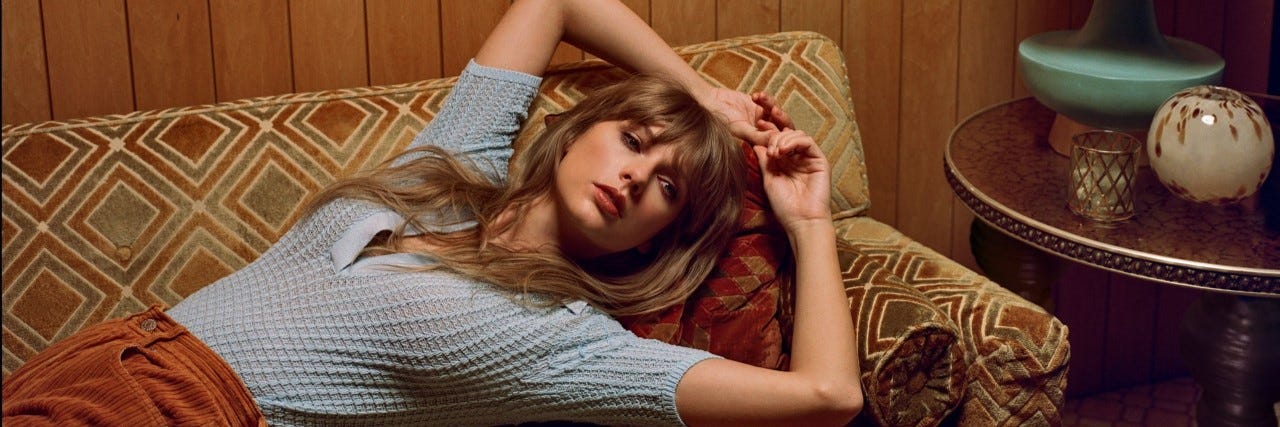
For instance. Three hours after its social debut, Midnights was a double album, now 20 songs, an hour for meditating in and brooding alongside (like Tusk, the album is both a soothing and cathartic space for working out weird heartaches). In some ways, these songs are set apart in more than just their delayed delivery. Much was made of those lowercase albums’ — which were also delightful surprises — deft exploration of other personas. The “3am edition” songs throw light on how much of Midnights feels like a single persona, the real Taylor Swift. Only the one where she’s on her vigilante shit feels like fiction, and it’s just cosplay anyway. She relaxes a bit on “3am”, and while creative writing is one of her versions of relaxing, relaxing can blunt her creativity.
She’s also rightfully chided by listeners for leaving killer tracks off of albums proper, and while some of the 3am songs are superior to their elders, generally their excision feels well-judged. A few of them are violations of the main album’s vibe — and vibe is what Midnights is all about. The tracks with Aaron Dessner bear folkloric traces of the National, a band whose mostly-organic soundscaping meets the cottagecore standard. “The Great War” is sedate and sententious, revealing its shape at a slow but gripping rate each time out. “Hi [as in “hello”] Infidelity” grounds its flippancy with its solemn piano chords, calling to mind songs like “Champagne Problems”, where all the drama feels adult and a little patrician, but less fictive. The soft assassination (of John Mayer) “Would’ve, Could’ve, Should’ve” tempers its most scathing moments with its hard self-reflection, honest confusion, and even flashes of serenity, in a roiling sea of keyboards.
Other songs would’ve faded into the main record. “Glitch”, like “Labyrinth”, is another exhausted exhale. Rather than allowing love to scare or bewilder it, this one luxuriates in the haze of never wanting to end things. “Paris” has the champagne effervescence of her other fanfics about the rich and famous, your “Starlight”s and “Long Live”s. And “Dear Reader”, a lonely-room song a la “New Year’s Day”, resists easy interpretation, but it does feel like a fitting end to the whole affair. If we take that this album is her most direct, least curated statement, its motivation is one of self-protection: listen, public and media, it’s better for both of us if we all stop puzzling so much over me.
Maybe she’ll find it feels better — more relaxing — to leave those walls down for good, and play around with what spills out. You’re tasked with a lot more self-defense when you’re the biggest pop star of all time, and putting it all out there is less advisable than usual, which your NDAs show you know. But the truth has that troublesome habit of setting you free. What would happen if Taylor made that full commitment? And is she any more guarded than Joni, whose words often concealed her voice’s naked emotion?
So listen —
I’ve told you about my dead friend but I didn’t tell you about my divorce. Two decades ago I met both that treasured friend — sweet yet cutting, effortlessly gifted in ways I wasn’t, the same distance from the rest of the world as me — and an equally treasured girl, a fetching, quietly brilliant little redhead in Elvis Costello glasses with a fantastic fashion sense halfway between skate-punk and the Disney Store. I’d never met anyone with a keener eye, or who got angrier when beauty or order were violated in art or life. She was prohibitively shy, and something fragile yet so sweet inside her drew me away from my usual impulses to chaos and defensive irreverence. My enthusiasm for verbal communication was challenged by her skepticism toward it, but we made it work — at least at first. After all those terrified, clumsy or simply nonexistent first tries, I finally felt the enlightening embrace of good first love, where daring to hold someone’s hand leads to a dizzying florescence of heart-to-heart dialogue. This was what life is about.
I loved that boy and that girl so immoderately because they enchanted me. At sixteen I felt the luminous ideals of platonic and romantic love greeting me from a world I’d just begun to experience, much less understand. It was that flavor of real-life fantasy where the glow off the pavement after it rains makes you want to burst into a dance, or run home and write a song. But waking dreams are all too easy to dispel, and how can you know at sixteen that you stand to lose the good things that feel so woven into your world? Her part of my book is its least open, only fair for someone whose lips no ship ever had to worry about. But without providing you a play-by-play, suffice it to say I spoiled our easy fantasy with a self-protective dishonesty rooted in insecurity. By the time I was 21, I’d learned all too well the recklessness of which I was capable, and its terrible price. For among other valuables, I’d already lost both that boy and that girl.
But the girl stuck around. Those subsequent years were marked by the agony of trying to love someone through walls you’ve built and the moss that grows as they endure, no cracks or tunnels or punched-out bricks. I lost years not learning that some damage is irreversible, and there’s no balancing out a scar in the bigger picture. If you get lucky, you reach the inconvenient epiphany that loving someone for years is the only way to learn how at all. By breaking her trust, I injured us out of comfortable communicative space, the ghosts of unheld conversations haunting our friendliest and most intimate moments. We moved away and back, took trips, ate out, drank, fought, wasted time. We hid from our memories and took our best new ones for granted. We got married; all records of the ceremony attest to its beauty. I know we felt the blissful sum of our love, in the clearest, hardest nonverbal beam we’d ever aimed at each other, together in front of our families and altar. We spent the next five years exploring new worlds of misery and mutual destruction, before a haphazard separation, and a divorce that had all the grace and ease of holding a beloved old dog underwater until it stops moving.
The trouble with committing to a love for whose damage you yourself are responsible is that your own needs survive blazing and unattended in the background. But while I felt starved for a certain kind of free-flowing companionship, I had songs to speak my truth, to talk about it with in a process that felt so much more productive — and by which I felt so much more seen — than stabs at real therapy. The effects of a brilliant chorus are immediate, the side effects no harsher than a healing bout of tears, and the risk of addiction can never be mortal. In the ballad of my long first love, Taylor Swift comes along at gratifyingly regular intervals to help me stagger back up and refill my soul. But the black cloud left little untouched, and in addition to our deepest, most obvious issues, I felt troubled by my ex-wife’s distaste for Taylor Swift — an almost unaccountable disgust for someone whose effect on me felt genuinely restorative.
When Midnights’ release and my friend’s passing basically coincided, they inevitably triggered a desire for finding connections. “Bigger Than the Whole Sky”, a gossamer, wrenchingly beautiful lament for a ”you” who’s irretrievably gone, had a mournfulness to its resignation that some online connected to women who’ve miscarried. Its softly strengthening “goodbye, goodbye, goodbye” clearly signals a loss. And though “you were bigger than the whole sky” is a curious way to bid a loved one your farewell, it’s not a bad way to describe how I felt about my friend, his preeminence in my story.
no words appear before me in the aftermath
salt streams out my eyes and into my ears
every single thing I touch becomes sick with sadness
‘cause it’s all over now, all out to sea
goodbye, goodbye, goodbye
you were bigger than the whole sky
you were more than just a short time
and I’ve got a lot to pine about
I’ve got a lot to figure out
I’m never gonna meet
what could’ve been, would’ve been,
what should’ve been you
Swift uses those contractions as a hook just a few songs later, throwing light on how important their specific placement is (the “should’ve” is always the one to land on).
Like the longer “All Too Well”, “Would’ve Could’ve Should’ve” could’ve used editing, if not full stanzas’ worth. But its messiness intensifies its sentiments, which are all of them necessary. “If I was some paint did it splatter/on a promising grown man?/and if it was a child, did it matter/if you got to wash your hands?” Swift is pretty fair in this song, giving credit to the sweet spots bad love has in the maelstrom of drama, with no direct allegation of abuse, but living pain as clear as day. “All I used to do was pray… I would’ve stayed on my knees/and I damn sure never would’ve danced with the devil/at nineteen”. She nails her points about power dynamics with a force that’s invigorating and sad at once, the frosty victory of a victim casually pinning their aggressor down, and delivering terse, vicious strokes. “Give me back my girlhood — it was mine first.”
All I was ever gonna get from “Would’ve, Could’ve, Should’ve”, I thought, was a quick flash of curiosity or empathy, and because it’s not as melodically assertive as most of the other songs, I thought it better that it wasn’t on the album proper. The 3am songs took longer to reach me. But there are gateways to my grief-confused heart they were designed to find. I admit a difficulty crying over my friend in the wake of his passing. At first I felt a shock muffled by something like inconvenience — like a prank you’re irritated with before it’s finished happening to you, then something so overwhelming all you can do is be quiet. Words and sense desert you, but the rest of the world stays exactly the same. We lived apart, so although he was my favorite voice on the phone for hours each weekend, I never saw him. He was in the world — and then he wasn’t.
Months later, sometime after midnight, I received a surprising e-mail from my former beloved. From her, the occasional poison dart by carrier pigeon is only fair, though my relationship with my own boundaries is still under construction. But the message was the most unexpected possible. It wasn’t even her words — it was her old archnemesis’.
She’d singled out “Bigger Than the Whole Sky”, “Would’ve, Could’ve Should’ve”, and “Mastermind”, presenting each lyric without comment. The elegy; the indictment; the bitterness phoenix, laying the groundwork for my wide smirk. It’s odd what stays with you and what deserts you when you’ve loved somebody so long you’ve left permanent marks on each other. I respect her intentions and do not invite you to speculate — you don’t have enough information — but I concede that in some way, my receipt of these lyrics had a manipulative quality. Because they have stuck with me ever since. These songs now hit me in that sometimes painfully bittersweet way of Swift’s most pointed missives. My strong and broken wife brought me into them, and now I can’t listen to “Mastermind” without smiling and shaking my head (or a pang of sorrow), and I feel edified about “Would’ve, Could’ve, Should’ve”, more attuned to how complexly and frankly Swift had captured her complicated and undeniably valid victimhood. And “Bigger Than the Whole Sky” — I mean, now that song breaks me in fucking half.
Did some bird flap its wings over in Asia?
Did some force take you because I didn’t pray?
Every single thing to come has turned to ashes
‘Cause it’s all over – it’s not meant to be
So I’ll say words I don’t believe…
You grieve relationships just as you grieve people, or lives you’ve lost the chance to live. It’s hard when fate tears ruthlessly through pictures you took so long to paint of how you wanted life to look, when you’ve built cities together in a private space your parting promises to pitilessly erase. But everyone has a world to share or to shut you out of, and life’s change is its gift, not just for how it keeps us interested but how it challenges us to adapt. We’re never doing it entirely alone — sometimes you can press a button and hear Taylor Swift, feeling those feels so deeply (and rendering them so vividly) she can’t help but reel you in and gut you. I don’t know what will become of the girl I once saw as an endgame. But she has songs to speak her truth — and if she’s letting a little Taylor Swift into the mix, it could only help the healing she deserves.
postscript
My brilliant wife found love with a respectful young man, and they attended several fantastic concerts without me. I am grateful to feel grateful for this turn of events. I caused her so much trouble and anxiety, but she was classy to me till the end of our era. I threw years of chances to heal her and grow our love away — and I miss it, I do. But I accept the lessons you force life to deal, and I’m grateful for the clarity of having been on both sides of some things. Don’t worry about me — the path forward is clear. I love the new chance of each new day, life’s abundant opportunities and gifts, all my lovely loved ones, and music, music, music. And I love the latest Taylor Swift record, which drives home how sometimes you can enjoy something, haha, alone — though I love + am grateful for my amazing partner, a pop ho and Swift skeptic who writes way better than I do. Loving someone brilliant; it’s a reward I’m lucky enough to know anew.