
in the lowlands
a copout from the men’s temple (or a leaky boat)

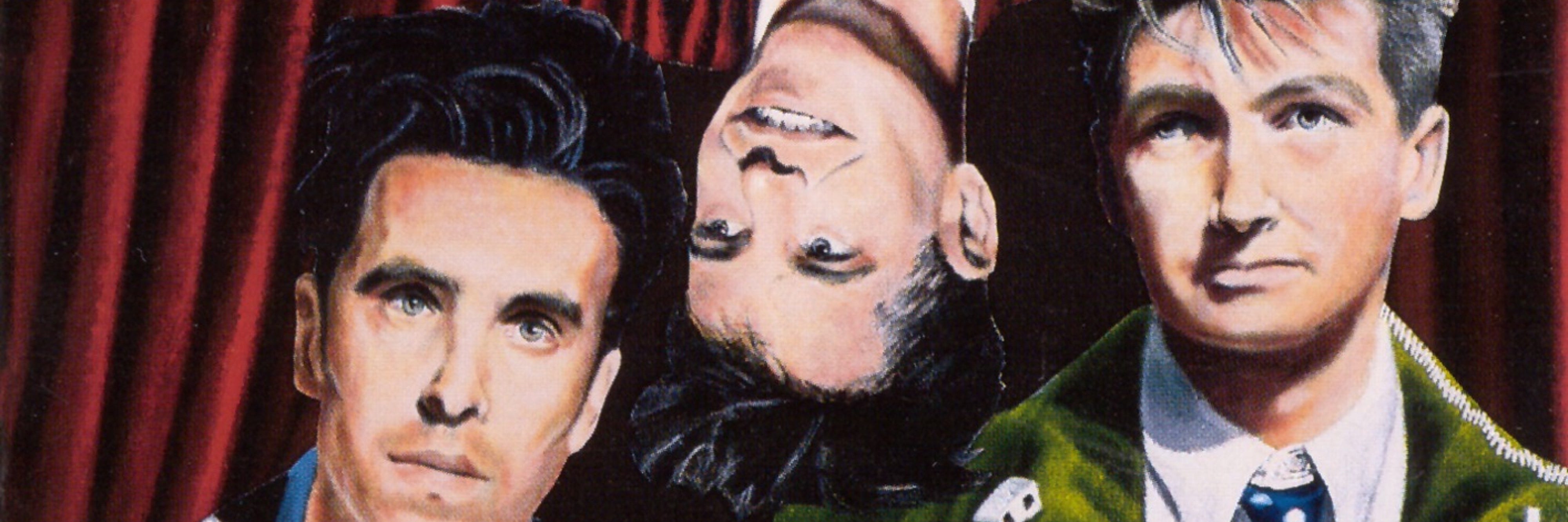
«ceci n’est pas une article sur Crowded House»
Where I came around to a couple of weeks ago is that in a world where, for instance, Doechii exists, we don’t need Life of a Showgirl. Though Taylor Swift is still a massive chunk of the zeitgeist, she doesn’t seem like she’s talking to anybody but herself anymore, and in circles at that. I needed the pert, unctuous soothe of its pop, its sweet-leap melodies, and its most deeply felt emotional corners, like “Ruin the Friendship”’s serenity in the face of grief, or “Opalite”’s delight in long-delayed relief. But there’s much richer music out there — on Sabrina Carpenter records, for instance, and that’s only a few feet further out of the box. And then an artist we just lost made three records in two decades it could take you even longer than that to unpack, much less savor. Wow — Taylor Swift has never been bigger, and never been less important.
It all feels more personal than political, though the powerful is inevitably political. I’m not yet going to subscribe to the theory that she meant those lightning bolts on that necklace as Nazi-courters. But when the great Dave Moore sits down and works out that she’ll go modal before she entertains a black note, I become that gif of Jerry Seinfeld throwing up his hands. With great power comes great responsibility — Stan Lee said that, and even he didn’t heed it. Still, where this terminally unique person might forever end up landing is dead center of a globe-swallowing Venn diagram. Not only did Swift settle on “we all dressed up as wolves and we looked fire”, she let her team put that cheesy-ass echo on “fire”. It’s terrible and beautiful at once — and while her poles are usually closer together, few folks contain Swift’s multitudes.

Also, tea is that I love Tortured Poets now: its candor, its opaqueness, its experimentation, its anger under weighted-blanket disconsolance. Its sounds. It doesn’t jump out and slap you, but my connection to it is thorny as it is. Historically, I can find solace in Swift’s songs even when they wound me, e.g. “All You Had to Do Was Stay”, because way more often they echo my own perspectives. But Tortured Poets came out the day I confessed to my last partner all that I’d kept from her, and ruined a promising yearslong romance. That’s obviously not a story it’s easy to tell, though it’s the one I’ve been going back and forth trying to figure out how to, because the emotional pain I dealt, the bludgeoning of trust and love, was honestly brutal at its worst. Amends are distant, comprehension elusive. Like so much of Tortured Poets, it’s unresolved.
There’s the brusque summary. At the tail end of a failing marriage to a high school sweetheart heretofore mentioned, a lovely person who coulda been the one the way we were linked, I met a new lover serendipitously, co-starring in a production of Lipstick Traces. She was moving to Brooklyn, but we spent so much of the next years on the phone, culminating in euphoric stolen weeks, flashes of our whirlwind first months and promises for a future it was on my shoulders to materialize. Our connection was total, familiar, electric, and so sweet, and we melded our lives, with plans to follow her to the city. Among the ways we spent that time, she became my editor, going line by line, pushing back hard when a sentence violated her senses of concision or clarity. My writing, and my lifestyle, progressed with her in ways I’d thought unimaginable.
But lies, like alcohol, are poison. I stopped drinking on her watch, but not every bad habit, and I kept this from her, under cover of the distance. This led to a breakup about a year in — since she wanted to end it when things were good, and to honor a violated boundary. But we didn’t let go, and it lasted another dramatic year and change, over which I let the bad habits and lies snowball worse. A person who had been supportive, beautifully vulnerable and positive, easily trustworthy and absolutely my best friend became my victim, illuminating patterns from which I wish I could’ve spared exes but laying fresh the severity of the wounds. All the consequences I lied (rather than made different choices) to evade dispelled a pink cloud we’d siphoned for an alternative fuel in that time we’d spent bonding with each other, and sharing each other’s lives. tl;dr: I fucked up, and I’m too old and full of love to fuck with someone’s heart like I did hers.
All of this to say: on that fateful day, licking executioner’s wounds, I might have preferred the balm of an album like, say, The Life of a Showgirl, if a nicer one (like 1989, or Midnights). Tortured Poets was ruminative, mixed so low, difficult to hear as the indie-pop tour-de-force it is at its best, and its lyrics felt like the unedited private musings of a diary, of something not worth publishing, much less for 31 separate new filings. It looked like an indulged privilege, in a time when outreach should have been the move, since Midnights was also a moody private indulgence, just a fun one. That album had soundtracked a honeymoon phase, my first visit to the city in ages, my first taste of its possibility. Appropriately, this album years later wasn’t my immediate friend. It amplified the sudden isolation of getting myself banished from someplace I loved. But Tay and I were down bad in different ways — because she was probably the victim.
That’s what I’d wanted to write a piece about, tying it to the album that capped the best days of our romance as I felt out tTPD’s corners, as its stark heartaches provided windows both into the grief I gave my partner and Swift’s process. That person had instilled in me a firm belief in the virtue of the confessional. As I live now in Tortured Poets’ moods, I not only feel empathy for its confessionalism, but catharsis in its empathy. Its songs’ various illustrations of grief — post-relationship grief, which always includes that grateful but torturous lingering existence of the other person — bring me to places I had to have put her in, places that twist me like salt in a wound. Like Mick Jagger, this artist uses masks well, but when her voice gives out a little on “I’m pissed off you let me give you all that youth for free”, that’s not rehearsed, that’s real. Its seemingly indifferent soundscapes and poetry reveal slow-blooming nuances with every play.
Maybe that’s what I wanted to write in the first place — not having learned to be careful about outsized ambitions, or the difference between honesty and self-indulgence, or personal essays written in haste. But reading it back, I don’t think so. There’s too much in that record, and too much in the situation, worth exploring — and it’s a piece I still want to write, will still torture myself about approaching and finessing. But yeah, I can’t prod it into unfolding on a schedule, which is how grief works anyway, and that album is now a tool for a strange grief I’ll carry for years. “How much sad did you think I had in me?” What Swift did with Tortured Poets, the way she apotheosized the mix of sloppy poetry and eagle-eyed insight that’s long been her stock in trade to make a kind of ultimate breakup record, bears weeks of studying, however dark your academia. Its songs hurt; their pain is so bleak, loss metamorphosizes into a kind of liberation.
In lieu of a bathroom-floor Oscar-worthy longread and exorcism of lost love, here’s one of the first pieces for the Globe I edited without her, an anniversary glance at another bit of subtly crafted sad-sack pop, Crowded House’s The Temple of Low Men. I adore Crowded House, because I love the Finn brothers, whether in the throes of yang (“Message to My Girl”) or yin (“Six Months in a Leaky Boat”). I admit Neil’s the surefire one more often, if the sentimental one to a fault like Tim’s the silly one to a fault. But Crowded House was less interesting than Split Enz, a singles band where the prior band rarely bored between hits on their albums. The piece is light, simple, not the act of bravery I owe my ex. But it’s the first thing I ever read her where she didn’t raise a single objection (though she wrestled a little with one line), an honor.
Neil Finn has done pretty well for himself, all told. Today, he’s a member of Fleetwood Mac, the band having decided they’re never going back again to Lindsay Buckingham. He’s been an OBE since 1993, enjoys healthy income streams from soundtrack work and touring, and admirably spearheaded the 7 Worlds Collide project, a series of all-star concerts and recordings for charity. He placed several songs on the Australasian Performing Rights Association’s Top 100 NZ Songs of All Time list, including one — you can probably guess which one — at #2. Radiohead called him pop’s “most prolific writer of great songs”. His celebrity isn’t obvious; he’s always been a humble, normal bloke. But even outside New Zealand, where he’s basically a god, he’s a success story.
The long path young Neil took to prominence is a unique one. His proximity to pop stardom began at just 15, in 1973. Split Enz — co-founded and led by his elder brother Tim and future Swingers leader Phil Judd — were right there on the telly, for the New Faces talent contest. Placing next to last didn’t stop them. Years of fitful fortune later, Judd, and his songs, were gone. Having moved to Australia in an attempt to broaden their commercial horizons — native Kiwi pop was still fairly nascent — Tim decided to bring his brother into the fold, at the suggestion of departing bassist Mike Chunn. Seven years after Neil sat in awe watching his brother and his band strive for stardom, he’d penned their biggest hit to date, “I Got You”. It shot to #1, as did its parent LP True Colours. Neil was instrumental to the group’s newfound international success.
Tim was on fire too, his talents ever-evolving. Many see this as the start of the band’s greatest era — though their dizzier, proggier early work is also full of treasures. And while Neil and Tim have remained unusually harmonious collaborators throughout the years, consistently finding reasons to work together as a writing duo, all records attest to Tim’s chagrin at Neil’s dark-horse swing around the track. It’s true, the elder Finn’s tendencies were more experimental, while Neil, who’d just turned 20 in 1978, was rooted more comfortably in the tighter, more melodic Beatle reconfigurations of the New Wave era. And no one, even only children, needs explained why your younger brother suddenly being regarded by millions as the golden boy in the band you invited him into as a mere guitar player would be a reasonably upsetting feeling to deal with.
The neon midsection of the ‘80s were where all of this came to a head. In 1983, after two more albums and five more hits (two of the biggest were once again Neil’s), Tim, recently recovering from a nervous breakdown, chose to exorcise some of his anxieties with a solo album. “There’s a fraction too much friction”, he diagnosed his own band from an untyrannical distance on the album’s hit; it was evident in both the title and content of Split Enz’ own Conflicting Emotions, a wonderful, underrated album which boasts one of Neil’s loveliest great songs (“Message to My Girl”) and one of his ugliest (“Bullet Brain and Cactus Head”, very probably a commentary on his relationship with Tim). By now, the group’s increasingly anxious record company was getting cynical about their art streak, and paring down their support. Tim had had enough, and split.
Neil tossed together an uneven farewell album, See Ya Round, and set out on his own path, on which he quickly encountered a Capitol executive with ears abuzz. I’ve never been clear on whether Tim’s gold-in-NZ, dead-everywhere-else second album, The Big Canoe, is titled in preemptive reference to the band Neil was workshopping out in Los Angeles. But in short order, that name crowded anything Tim was doing out. Crowded House took nearly a year to break internationally, helped immensely by “Don’t Dream It’s Over,” one of those heaven-sent modern standards. It was massive in the U.S. and U.K.; Neil had finally punctured the big-time firmament. Forever puckish, his brother was candid about his feelings at the time: “I was happy when it wasn’t going well and depressed when they got a hit. [Neil] had achieved what we’d dreamed of for so long.”
And though it was far too soon to dream it was over, the younger Finn was suddenly feeling acute pressure to follow up. Details of what was going on behind the scenes as the group slumped semi-triumphantly into their sophomore effort (the LP’s working title was Mediocre Follow-Up) are nebulous at best, but at base it’s clear that being an overnight success didn’t compel frequent visits from Finn’s muse. Relations between he and his Housemates were civil, if increasingly claustrophobic. Troubled drummer Paul Hester kept their rooms running with electricity, but his wild-card ways robbed the band of a backstage ballast, and at this time, one was necessary — a tantalizing, if unclearly sourced, tidbit online suggests that Finn churlishly started to blame bassist Nick Seymour for his case of writer’s block, even firing him (for one month) in 1989.
When Temple of Low Men came out 35 years ago, its very title announcing a downbeat retreat from the more hyped-up vibe of the debut, there was little agreement what to make of it, by the press or the public. But in general, the disappointment that terrified Finn had been manifested. The bar it hoped to meet had been a high one. Certainly, if their debut album had peaked at number one in Oz and won the ARIA for Album and Song of the Year, as The Temple of Low Men and its gorgeous closer “Better Be Home Soon” respectively did, they’d have been plenty pleased. But the album was quickly regarded as something of a missed step. If you’ve lucked into a blockbuster, you’re expected to continue busting blocks, and the press’s enthusiasm, while kind, tended muted, outside the outright savagery of Robert Christgau’s brilliant but bitchy blurb:
“Problem’s not that philistine tastemakers are quashing Neil Finn’s hit-debut blues, but that Finn has neglected the only thing he has to offer the world: perky hooks. Programmers don’t care what he’s brooding about because nobody else does. Plenty of popstars have managed to stir up interest in their petty anxieties. Be thankful there isn’t one more.” He concluded with the casual, cryptic dismissal of a “C” grade.
As usual, there’s at least one kernel of truth, whether you agree or disagree: perky hooks were Neil Finn’s great talent, and for whatever reason, this wasn’t his target when he had the weight of a worldwide hit on his shoulders. The elusive personal inspiration isn’t always effectively explored the songs, most of which tend abstract lyrically — “I Feel Possessed” and “Better Be Home Soon” both sound like two of the sweetest messages to his girl Neil ever wrote, but they’re scarred with uncertainty. And when he does nail the words, as on the Elvis Costello-favored “Into Temptation” — which is absolutely one of the top ten greatest songs ever written about infidelity — he echoes the dark sadness of the subject with his music. (Finn insists that this song was only inspired by the escapades of a rugby team in hotel rooms neighboring his).
The sound of the album also constitutes the start of a self-liberation from the ‘80s sonic trappings the debut inevitably boasted. Though producer Mitchell Froom and soundscaping partner Tchad Blake were evolving into their suggestive, atmospheric ‘90s style, you can hear them playing around with unconventional sounds, weaving careening sheets of psychedelia into “Kill Eye” and “When You Come”, or stripping down the settings to showcase Finn’s voice — which is an underrated asset, assured yet also naturally vulnerable. “It’s funny to me,” Froom told Finn on his Fang Radio show. “Records just happen, you make them, you do the best you can.” He tells of how mixer Bob Clearmountain, living up to his name, “felt he went a little too bright on the record,” dishing that he’d sustained ear damage after an ill-managed scuba excursion.
And it’s true that to some extent, Temple of Low Men’s rep now stands as “one for the fans” — a sleeper of sorts sandwiched between the glossy multiplatinum debut and the lively, inspired Woodface, for which Tim Finn himself was poetically brought in as co-writer and vocalist. The latter is perhaps Crowded House’s best album — a testament to addition, collaboration, brotherhood, sharing the load with someone you feel more comfortable doing so with than your bandmates. But Temple of Low Men is the album on which Neil got to stretch out more than ever before, explore his gifts, and while it may have yielded unpleasant feelings on every side, his decision to resist forcing hit hooks could have been the right one, and this being Neil Finn, it’s not as if there isn’t a terrific melody hidden in every corner of the music, worth diving back in to discover.
Are they good songs? Yes. Great? Well, only a few — that Richard Thompson plays the solo on the peppy “Sister Madly”, for instance, is the most interesting thing about it. “It’s a mystery”, Finn told the Guardian years later about the art of songwriting. “And it’s a mystery to me that it’s a mystery — it annoys me that I haven’t got any code or modus operandi for writing.” A normal bloke till the end. Structurally, these little works often feel confused, just like the production. “It suffered a bit from having too many parts… like it was trying a bit hard,” Froom later conceded. Yet listening to Finn perform these songs in spare acoustic settings on the Fang Radio episode devoted to the album is a revelation — finally, some of these songs breathe, and you can luxuriate in Finn’s chords, the delighted Beatleness (there’s no other word for it) of his choices.
On that loose show, he’ll sometimes issue “tree reviews,” providing his retrospective analysis of an album along his career by linking it to a particular kind of tree, which he describes (sometimes seeming to forget that he’s talking about an album) in mock-meditative tones over amusingly straight New Age strains. For The Temple of Low Men he selects “the weeping willow, for the mixture of melancholy and steadfastness this album displays.” He seamlessly proceeds into a review of Xgau’s review of Low Men:
“A critic — Robert Christ-someone — claimed I was wallowing in self-pity with this album. But I disagree. Perhaps, like the weeping willow, I was simply leaning closer to the river to avoid being chopped down, and to feel better the flow of nature, and the bittersweet sadness of experience. So, fuck you, Robert.” He declines to issue a grade.
I think her modal moves put her ever closer to my grand conspiracy theory that she originally learned to write songs by singing "Ride Wit Me" by Nelly to the chords to "Complicated" by Avril Lavigne and has been writing the same song ever since -- not sure where that puts her socio-cultural-whateverally but it *is* interesting and it *does* usually work. My finalish judgment on "Life of a Showgirl" is that it's fine and she'll do better, probably very soon.